The NSF has a website with links to real world math applications. These applications include a mathematical model to determine if a person will survive treatment for an acetaminophen overdose or require a liver transplant, using math to guide cancer treatments, or fighting crime to name just a few. It's all interesting stuff.
Interest of the day
A blog about miscellaneous topics.
NASA has released a new version of the Earth Now app for the iPhone. It allows you to visualized climate data sets from satellite and temperature measurements made around the world.

A new report in Nature measures how the birth, acceptance, and death rates of 10,000,000 words changed over the last 200 years in three languages. It takes about 40 years for a word to become accepted, and fewer words are being born likely due to word processors and spell checkers (compact vocabularies). New words tend to be related to technology and are adopted faster words of the past.


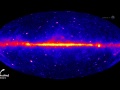
The Fermi Gamma-Ray Telescope has discovered hundreds of unknown objects in the universe emitting enormous amounts of gamma-ray energy as illustrated in this video The animations and images are very cool.
This short animation describes the Orion Exploration Flight Test #1 due to take place in 2014. It looks like cool and challenging test plan. Good luck to everyone involved in the project.

Check out this short entertaining and informative video explaining how the Diamond Synchrotron works using donuts and stop motion animation. Nicely done.
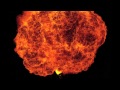
Students at the University of Oxford created this cool android app LHSee. It shows particle collision data on your phone using real collision data from the LHC. The animation of a collision is pretty neat too.

"We are surrounded by Nothing. Everywhere we go, we have no idea what we're not seeing....Nothing is the best place to find the most interesting...somethings". How timely and freaky this is when art and science collide with nothing giving the same kind of result. Could having nothing really be something?